
Patch Testing San Antonio

Patch Testing
San Antonio
Find Out What’s Really Irritating Your Skin
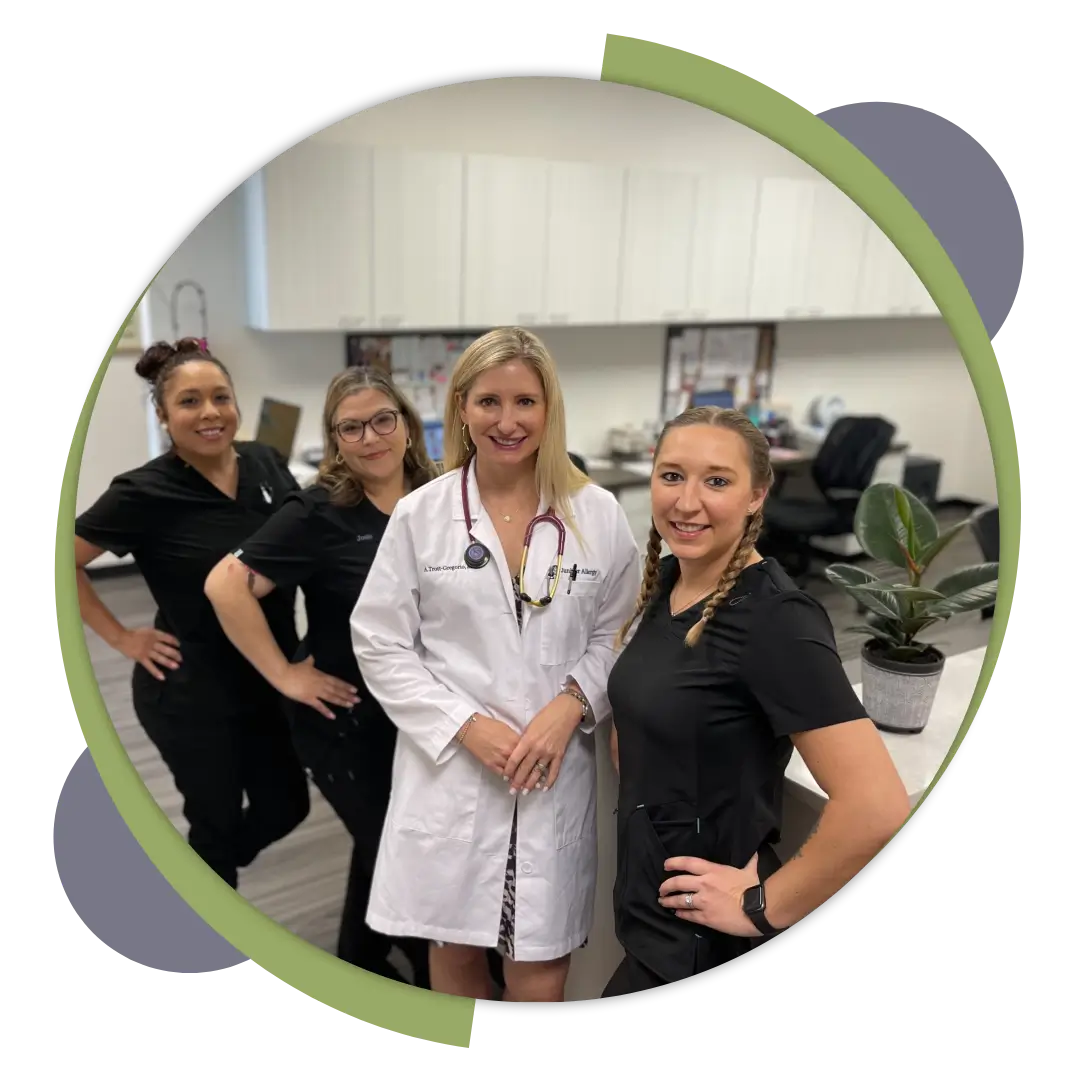
Patch testing at Juniper Allergy in San Antonio identifies the exact substances your skin is reacting to. Dr. Amanda Trott-Gregorio will pinpoint your contact allergens precisely, so you can stop guessing, stop rotating products, and start healing for good.

Dr. Amanda Trott-Gregorio
Dr. Amanda Trott-Gregorio is a board-certified Allergist/Immunologist who has been in private practice in San Antonio for the past 10 years. Her personable demeanor and passion for resolving allergies has transformed the lives of countless patients.
A native of south Texas, Dr. Amanda Trott-Gregorio graduated from Texas A&M University in 2001. She received her MD from St. George’s University School of Medicine (2003-2007). She completed her residency training at UTMB in Galveston (2007-2010) and Allergy and Immunology fellowship training at Washington University in St. Louis (2010-2012).
Dr. Amanda Trott-Gregorio had the opportunity to learn from some of the most accomplished Allergists and Immunologists in the world at St. Louis Children’s Hospital and Barnes Jewish Hospital. Her research data has been published in peer-reviewed journals and she has written chapters in The Washington Manual and Nelson’s Textbook of Pediatrics. Dr. Amanda Trott-Gregorio is a fellow of the American College of Allergy, Asthma and Immunology.



Insurance We Accept







Insurance We Accept
What Is Patch Testing?
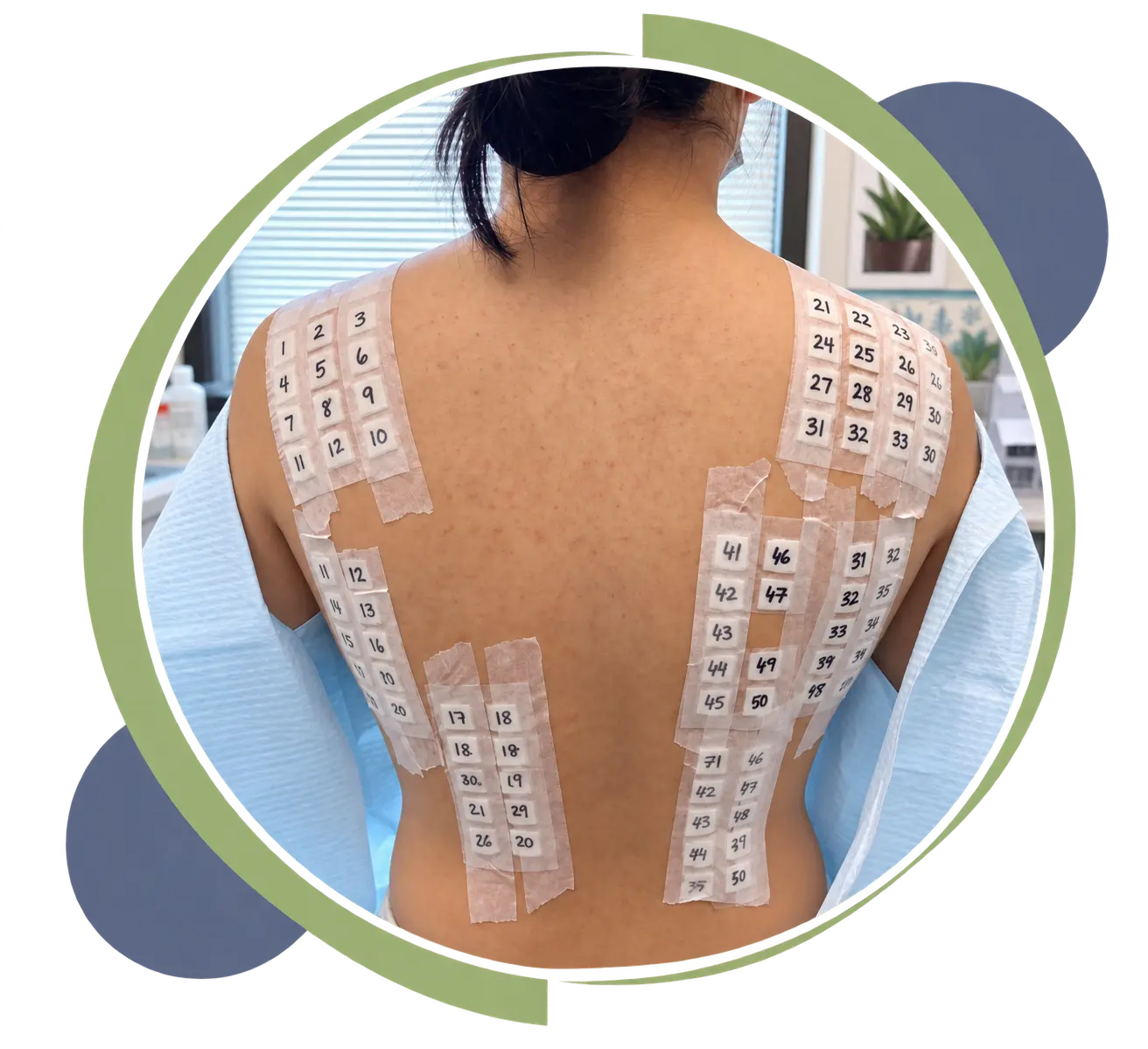
Patch testing is a specialized allergy test designed to identify contact allergies, the delayed skin reactions triggered when your skin comes into direct contact with a specific substance. Unlike standard allergy testing which looks for airborne or food triggers, patch testing focuses specifically on delayed allergic reactions to things like metals, fragrances, preservatives, hair dye chemicals, rubber, and workplace substances.
During the test, small amounts of common contact allergens are placed into individual chambers, securely applied to your back with adhesive tape, and left in place for 48 to 72 hours. You’ll return to the clinic to have the patches removed, and again on the fifth day (around the 96-hour mark) so Dr. Trott-Gregorio can carefully re-evaluate your skin. It is considered the gold standard diagnostic test for contact dermatitis and one of the most valuable tests for anyone dealing with a recurring skin rash that hasn’t responded to standard treatment.

Common Substances Tested During Patch Testing
✓ Detergents and soaps
✓ Cosmetics and makeup
✓ Hair dyes and hair products
✓ Metals (including nickel and chrome)
✓ Leather and leather tanning agents
✓ Latex and rubber components
✓ Various medications
✓ Preservatives
✓ Fragrances
✓ Dental care products
✓ Fragrances
✓ Certain foods
How We Conduct A Patch Test
1
Preparation
Stop oral steroids for at least 5 days before and during testing, and avoid topical steroids on the test area.
2
Patch Application
Dr. Trott-Gregorio applies allergens in individual chambers, secured to your back with adhesive tape for 48 to 72 hours.
3
First Reading
You’ll return after 48 hours to have the patches removed, with each site carefully evaluated for redness or reaction.
4
Second Reading (Day 5)
Come back on day 5, around 96 hours in, so Dr. Trott-Gregorio can re-check your skin for delayed reactions.
Hear It from Our Happy Patients!


Why Choose Juniper Allergy For Patch Testing in San Antonio
Board-Certified Allergist
Our board-certified Allergy and Immunology specialists deliver expert, evidence-based care focused on accurate diagnosis and effective, long-term treatment.
Over 13 Years of Trusted Care
For more than 13 years, Juniper Allergy has proudly provided comprehensive allergy and immunology services to patients and families throughout San Antonio.
Personalized Treatment
We create customized treatment plans based on your unique symptoms, medical history, and health goals to achieve the best possible outcomes.
Patient-Centered Care
Your comfort and wellbeing come first. We take the time to listen, answer your questions, and build lasting relationships so you always feel supported throughout your care.
Conditions Diagnosed By Patch Testing

Contact Dermatitis
An inflamed, itchy rash that flares up when your skin comes into direct contact with allergens like nickel, fragrance, or common preservative ingredients.

Occupational Dermatitis
Skin reactions developed through on-the-job exposures, frequently seen in healthcare workers, hairstylists, mechanics, cleaners, and tradespeople in the construction industry.

Cosmetic Dermatitis
Redness, breakouts, or irritation caused by skincare products, makeup, hair treatments, or fragrances that contain hidden ingredients your skin reacts to.

Eyelid Dermatitis
Puffiness, flaking, or persistent itching around the eye area, often traced back to eye makeup, nail polish transfer, or facial cleansers.

Hand Eczema
Ongoing dryness, painful cracking, or blistering on the hands triggered by repeated exposure to soaps, gloves, sanitisers, or harsh chemicals.

Shoe Dermatitis
Itchy, scaly patches on the feet caused by rubber components, leather tanning chemicals, adhesives, or dyes used in the construction of footwear.
Your Skin Won’t Heal Until You Find the Trigger
Frequently Asked Questions
How much does patch testing cost in San Antonio?
Cost depends on the allergen panels needed and your insurance coverage. Most plans cover medically necessary patch testing. Call us at (210) 888-1297 before your appointment and our team will walk you through your costs clearly.
Is patch testing painful?
Is patch testing the same as a regular allergy test?
No, they test for completely different reactions. Standard allergy testing identifies IgE-mediated allergies like hay fever or food allergies. Patch testing identifies delayed hypersensitivity reactions responsible for contact dermatitis, making it the right test for recurring skin rashes caused by things you touch.
Can I shower or exercise during the 48 to 72 hours the patches are on?
Keep your back completely dry and avoid heavy sweating. That means no swimming, no intense exercise, and extra care while showering. Our team will give you specific practical guidance at your appointment so you know exactly what to do.
Do I need to stop any medications before patch testing?
Yes, you’ll need to stop oral steroids for at least 5 days before your test and throughout the testing period, and avoid applying topical steroids to your back or the test area. These medications can interfere with accurate results. Our team will give you clear guidance when you book your appointment.